|
|
 Categories
Categories
Categories
|
|
Home | Media | News | Dainius Zalimas, President of the Constitutional Court of Lithuania: „Constitution is not a suicidal covenant, it is rather a means to defend the state.
04.05
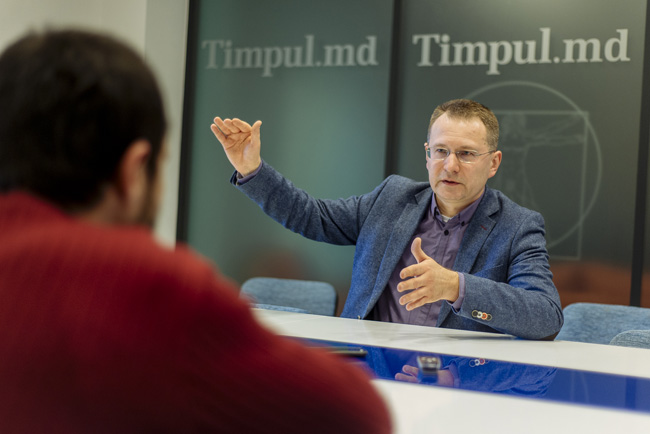
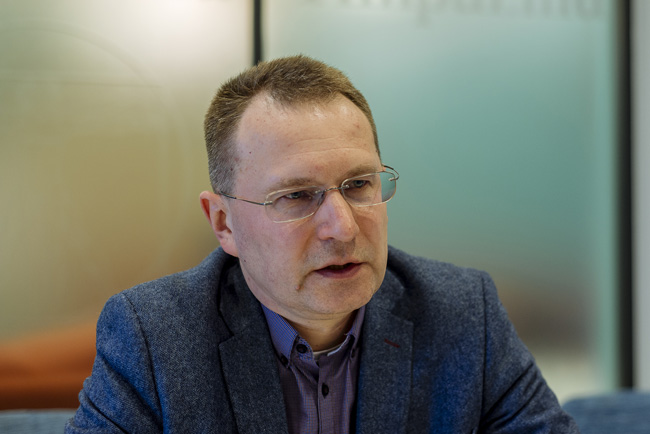
2015 Dainius Zalimas, President of the Constitutional Court of Lithuania: „Constitution is not a suicidal covenant, it is rather a means to defend the state.The translation may be subject to editorial revision Dainius Zalimas, doctor in Law and University professor, President of the Constitutional Court of Lithuania, visited the Republic of Moldova several times and held lectures in International and Constitutional Law, including for our students.
Between 1998-2001, Mr. Zalimas was the adviser to the Minister of Defence of Lithuania. He is the author of books, articles and draft laws including the one banning communist and fascist symbols in his country. In this interview, Mr. Zalimas addresses subjects related to the level of corruption in Lithuania, referendums that cannot take place, the state language of the Republic of Moldova as well as to the manner in which a neutral state can defend itself in case of an aggression from Russia.
- Mr. Zalimas, which are the major restraints that Lithuania has faced in the process of adjusting its national legislation to the European standards? - The most difficult for us was to improve our laws regulating economy and competition, which initially were written in a manner that permitted misinterpretation. A particular problem was related to the soil. Someone proposed a referendum to state that the Lithuanian soil cannot not be sold to citizens of other EU states, despite the fact that Lithuania is a full member of the Union. Still this referendum was declared void due to the lack of quorum. Later an initiative appeared to hold another referendum to refuse the joining of Eurozone. At that time the Constitutional Court of Lithuania (CCL) had to deliver a precise definition for the referendum. For example, you cannot ask people weather they agree that women are not equal to men, because it contradicts the Constitution and the human rights principles. It means that there cannot be held referendums which cause chaos in the constitutional system and threaten the independence, democracy and natural human rights. Articles of the Constitution cannot be interpreted separately, and asking if we need Euro as our official currency is like asking whether Lithuania should access the EU. Thus, the referendum failed to take place. I think that today Euro is a guarantee of our economic stability due to CCL too. - Who is interested in organizing such plebiscites? It is known that in the former Soviet countries there are many referendums supported by Russia which encroach on the territorial integrity of certain countries. In the Republic of Moldova there took place two such referendums - the first was on the independence of Transnistria and the second on the prospective independence of the Gagauz autonomy… - The referendums had a leading role during the restoration of the independence of Lithuania. At first we had a consultative referendum by which the Lithuanians confirmed the country’s independence. Following the second referendum, in 1992, it has been decided withdrawal the Russian army from Lithuania and restitution by Russia of the damages caused by the Soviet occupation. Naturally, the Russians gave us nothing, but we got rid of their troops. Following the third referendum in the same year the Constitution of Lithuania has been approved. In 2004 there took place the referendum on Lithuania’s accession to the EU. There were also another numerous initiatives on the organization of plebiscites in relation to which the reports of our Intelligence Service’s had shown that they were used as instruments in the interests of forces hostile to Lithuania.
- Do you mean in the interest of Russia? - We may say so, as the referendum on the ban to sell the soil could have generated a conflict between Lithuania and the EU. Who would have gained from this plebiscite or, equally, from the one related to the Eurozone?
Criminal punishment and contraventional sanction for the promotion of the communist symbols
- In your opinion how should the authorities from Chișinău react with respect to politicians that support the referendums organized in the interests of Russia which threaten the independence of the Republic of Moldova? - This question is very difficult; it is necessary to possess exclusive evidence that would prove that politicians you refer to really execute the orders delivered by another state against the Republic of Moldova. We shall keep in mind, however, that everyone has the right to expression and that campaigns against the EU or NATO are not prohibited. In Europe we also have an Eurosceptic movement. The state can do nothing in this regard, if the society is vulnerable to totalitarian communist regime, which is incompatible with the idea of democracy.
- Banning of communist symbols has been declared unconstitutional in the Republic of Moldova. How did Lithuania succeed to ban them? - I was not a judge of the CCL at that time but I was one of the authors of the law prohibiting the use not only of communist, but also of fascists symbols. There is provided a contraventional sanction in the amount of 150-300 Euros and seizure for their use. Nevertheless the law provides for exceptions such as journalist activity aimed to inform the society or scientific literature. There is, however, an article in the Criminal Code which is based on the EU decisions related to the fight against racism and xenophobia. Thus, all EU countries are bound to criminally punish any justification of genocide against humanity and the war crimes committed on the grounds of race, religion or nationality. However we have extended these provisions and have instituted criminal punishment also for the justification of Nazi and Soviet occupation regimes.
- What if a writer uses these symbols in stories? - It depends on the manner this is done. If the writer describes that Holocaust was something wonderful, a criminal punishment is inevitable. In fact, this is an European standard in order to prevent any incitement to aggression by freedom of expression.
How did Lithuania get rid of Saint George Ribbon
- On the other hand, the advocates of communist symbols argue that they cannot be banned, due to the fact that there exist communist parties in certain EU states. And they seem to be right. - It depends on the character of each party. In Europe, these parties do not promote ideologies that are incompatible with democracy. In Lithuania, this party was banned in 1949 by the movement of resistance against Soviet occupation, and later in 1991 for not supporting neither the country’s independence, nor the democracy; it rather incited to hate and for co-operated with the occupation regime. About one third of the Lithuanian population suffered from Nazi and Communist occupation regimes. And what shall we defend: the honor of these victims or of those who glorify the criminals?
- Are the veterans of the WW II in Lithuania entitled to appear in public wearing their medals? - There are exceptions for them too, if they bear these insignia on certain days and their form is not changed. Such actions must be organized in a civilized way. Each country can decide if it needs them based on previous experience.
- Is the St. George ribbon banned in Lithuania? - It is not forbidden, but I would not wear it in Lithuania. At times some taxi drivers displayed it in their cars, but now you can hardly see it, as the people boycotted all the taxi firms which displayed it. Prohibition of such symbols glorifying the crimes of the Soviet occupation regime diminishes also the informational propaganda. This is due, as you’ve mentioned, the Russian factor.
The problem related to the state language in the Republic of Moldova faded away
- Do you know that Romanian and Moldavian are in fact one and the same language? - Yes, of course, the language is called Romanian.
- So it is from the scientific point of view and this is also stated in the Declaration of Independence of the Republic of Moldova. Nevertheless, our Constitution, which was adopted by the Agrarians i.e former Communists, provides that the state language is called Moldavian. Subsequently, the Constitutional Court of Moldova (СС) has ruled that the text of the Declaration of Independence prevails over the text of the Basic Law. However, the country fails to have a parliamentary majority in order to change the Constitution in this regard. What would be the solution? - It would not be correct from my side to give advice to another country on how to solve its domestic problems. But I know the problem, as it was namely this judgment of the CC that helped us in the case referring to the referendums where we had rule that the Lithuanian Declaration of Independence from 1918 prevails over the Constitution. And that no Constitution can question what has been proclaimed by the Declaration of Independence. Following this judgment of the CC, in Moldova the language problem faded away, because the Court is the sole institution empowered with official interpretation of the Constitution. You may formally change some letters and write “Romanian” instead of “Moldavian”, but the problem does not exist anymore.
- In our country the situation is a little different. It is possible that following the next elections pro-Russian forces come to power. And there is a risk that the new members of the CC cancel this judgment, referring to the Constitutional provisions … - Constitution prohibits the Court to change its judgments. Repeated interpretation is permitted only under exceptional circumstances, when the decisions do not correspond to reality. And any composition of the Court shall comply with the decisions that have been taken previously, even if it does not agree with them.
- In our country it may be invoked just as an exceptional case which contradicts the reality. - This is impossible in a democratic society.
Negligence or corruption in Lithuanian justice?
- Mr Zalimas, even though there are voices saying that there were substantial foreign investments made to reform Moldovan justice, the results are not clearly visible. Our country is still lacking behind in fighting corruption, though only recently some progress was made. Anyway, so far we have got convictions on corruption only for doctors and policemen from villages and judges from districts. Mr Zalimas, how could we overcome this situation? In Lithuania justice reform is still being implemented, in order to make the judicial system more efficient and to get it closer to the people. Out of some 40 district courts of the lowest level we try to make 12, given that some of them are assigned a small number of cases while others - too many. There are also going to be consolidated administrative courts, which are in charge of examining litigations between citizens and the State. Your assertion on corruption is not a news, either. An ordinary citizen of Lithuania would say the same. It is true for us also that low ranking civil servants are held liable, as opposed to sonorous cases, with charged politicians that have little or no result. For instance, a case related to a party’s leadership is being postponed for eight years. As a general principle, countries in transition should have much more severe measures implemented in this regard. On the one hand, independence and transparency in justice should be guaranteed and, on the other hand, those who take wrong decisions should be held liable. It is also crucial for the judges to give up bad practices. I am not referring to cases where there is evidence of bribery, I speak about certain judgments that are totally ungrounded which give rise to doubts. It is also true for us, in Lithuania, that judges cannot be held liable for the content of a decision, but the judge can be punished for negligence. For instance, some judges leave their case-files in a drawer and do not examine them in due time. Thus, in a district court there were three judges and all of them were dismissed for negligence.
- Do you really think they forget about some case-file or this negligence is a result of corruption? Society is looking at these cases with suspicion. There are doubts, but we cannot charge anyone without proof.
Journalists judging magistrates
- How are judges being punished in these cases? These cases are examined by the Disciplinary Court composed not only of judges, but also of journalists and representatives of the civil society. Its decisions are later proposed to the Magistracy Council (MC) which submits them to the Head of State. Subsequently, the persons referred to in the cases are dismissed for discrediting the image of a judge. At the same time, the President of the country has no power to dismiss a judge on her own initiative without the proposal from the MC. Though such cases are not frequent, they accustom judges to good discipline. The magistrates whose decisions are changed repeatedly by superior courts due to obvious errors are also sanctioned. There are also assumptions of corruption here, but again it is necessary to have evidence. As far as I remember, only some five judges were sentenced on charges of corruption.
- Who elects the representatives of the civil society in the Disciplinary Court and what is the procedure? Like the judges of this Court, the representatives of the civil society are not paid for this job. They are also members of the Qualifications Committee on selecting candidates for the office of a judge and are elected by the MC and the President of the country. It happens sometimes that these persons are not very active or miss the sittings, The presence of journalists in this court instead is beneficial. There was a case when due to journalists there has been revealed an attempt of bribing electors in huge proportions. Following the examination of this case, the Constitutional Court of Lithuania ruled for the exclusion of some MPs from the Parliament.
Cases against politicians are infinitely postponed
- How serious is the level of corruption among Lithuanian officials? There are also many talks on this issue. According to the polls, Lithuanians have least trust in political parties and State institutions. Though people themselves elect governance through fair elections, political parties are not always able to fulfil their electoral promises. This is where distrust emerges. As a rule, most corruption cases are filed against local public administration employees. But on the level of high officials, there are few cases filed, some of them being under examination for years. It is obvious that in such situations society is also accusing justice for corruption. But care should be taken as opinion polls point to the fact that mistrust in justice of people having no connection to justice is twice as higher as compared to that of people who stood for a trial.
- Is it possible that cases filed against politicians are delayed until the expiry of the statue of limits? I don’t know. Limitations are still valid for those cases. The process is long also due to the fact that for some high rank officials it is necessary to repeatedly withdraw their immunity. People under criminal investigation may be elected in Parliament, and afterwards they are each time withdrawn immunity. An interesting case was the one initiated against the former Minister of Defence of Lithuania, who while being a MP was sentenced to prison for bribery. The Parliament withdrew his immunity, but after being arrested there was registered an insufficient number of votes to withdraw his MP mandate. On the other hand, I would come up with the example of our EU Commissioner who withdrew from Parliament immediately after there were initiated criminal investigations against him. He never stood for elections and declared his trust in justice. Later he was cleared of charges and returned with dignity. In most cases, though, our officials under criminal investigation declare themselves victims of some political settlement of accounts. How could Moldova defend itself in case of a Russian invasion
- Mr Zalimas, I am addressing you this question in your capacity as participant to the struggle for freedom in Lithuania. How do you think, what Russia wants today? At that time I was 17, being just a volunteer in Riflemen’s Union defending the Parliament against an eventual attack of the Soviet Army. But the events occurring nowadays point to the fact that Moscow is creating obstacles for Ukraine to become a democratic state, probably stemming from the old Soviet theory that Russia without Ukraine does not represent an empire. In my view, it is unimaginable that in the XXIst century the statehood of a country is threatened and one’s grandeur by external aggression is displayed. I believe here a psychological issue is at stake, as Russians are aping the mentality of Great Britain and of other colonial powers of the XIXth century. Therefore, the country you are talking about is at the beginning of its development… A greater issue is that the ideology of this state is to glorify the Soviet criminal past. In 2005, I wrote an article on the similarities between of Fascist Germany propaganda and the one of Putin’s Russia. I was saying that the reasoning used by both regimes in cases of occupation are identical. At that time I was understood by few, but now it is more than obvious that aggression against Ukraine is justified by Nazist arguments of 1938-1939, according to which Austria and Czechoslovakia were not occupied, they were liberated.
- How could a neutral state like the Republic of Moldova defend itself against an eventual invasion, having a Russian Army on its territory? Let me tell you my subjective opinion. Constitution of the Republic of Moldova prohibits presence of foreign troops on the territory of the country. Thereby, presence of ther Russian army is unconstitutional. Following ECtHR’s recognition of Russia’s guilt in violating the rights of Moldovan citizens on the left bank of Nistru River, I asked myself: how could a foreign state be liable of violating human rights on the territory of another state? Indirectly, it would mean that this territory is under the jurisdiction of another country. And this means occupation. I hope the war will not extend on your territory. In any case, a neutral state which is under the protection of the right to independence and territorial integrity, and as a result, when attacked it enjoys the right to self-defence. It is an inalienable right of every state. Under international law, neutral states are allowed to make use of any means of defence and to ask for help in case of aggression. Lithuanian Constitution does not provide for the word “neutrality”, but there is an article prohibiting presence of foreign military forces. Given the fact that Constitution has to be understood as a whole, without taking some of its quotations out of the context, and taking into account the interpretation of the Lithuanian Constitutional Court, in our country only the presence of foreign troops is prohibited, when the security of the State is in danger; still this is not applicable for the presence of foreign military forces guaranteeing Lithuania’s independence and security. We have Lithuanian military basis that are used by the air force of other NATO allied states patrolling the sky of Lithuania, Latvia and Estonia. And this is for the benefit of our people. In other words, Constitution is not a suicidal covenant, it is rather a means to defend the state.
Author: Pavel Păduraru |
 3259 Views